For people just starting out
The best time to start tracking is your first real pay.
Knowing what you earn, spend and save is a habit, and it’s easiest to start before your money gets complicated. cent4cent does the sorting every month, so the habit takes a few minutes rather than willpower, and it pays off for decades.

What it’s like before you track anything.
- The balance is how you decide. If it looks fine, it’s fine, until the card, the rent and the insurance land in the same week.
- You have a feeling about whether you’re saving, but not a number, and no idea what you could put away if you tried.
- The apps you tried wanted categories and a budget before they’d show you anything. You only wanted to know where the money goes.
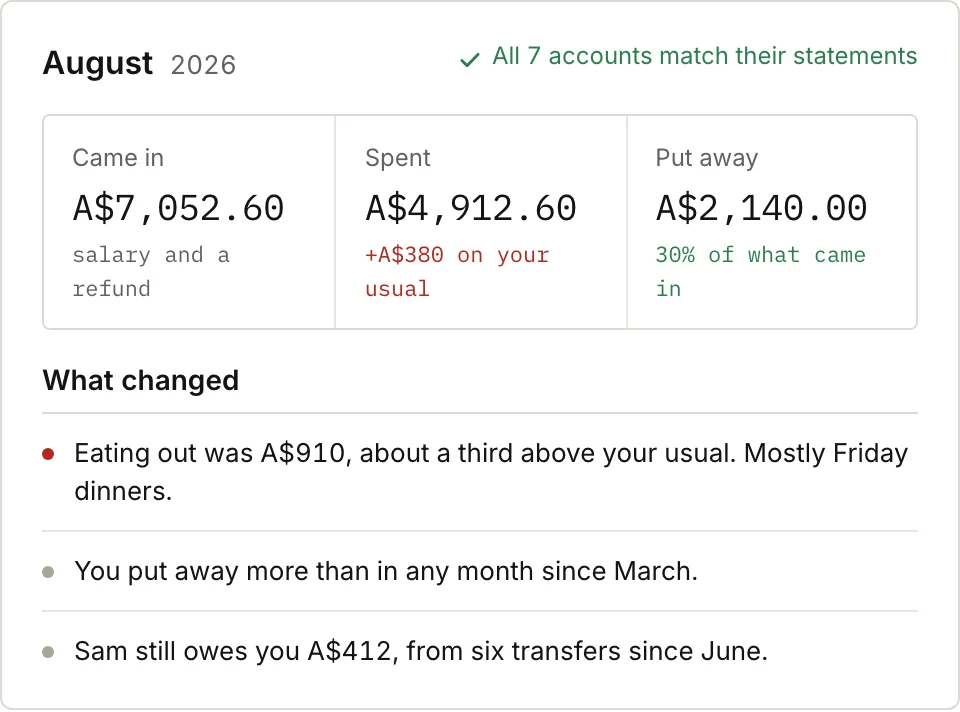
A first month, in three numbers.
Here’s a made-up month for someone on their first salary, the way cent4cent lays it out.
August, for someone on their first salary
| Where it went | Amount |
|---|---|
| Rent | 1,650.00 |
| Eating out and delivery | 412.60 |
| Groceries | 318.20 |
| Transport | 186.00 |
| Phone and subscriptions | 96.80 |
| Everything else | 724.80 |
| Spent | 3,388.40 |
- Rent took 39% of what came in.
- Eating out and delivery came to A$412.60, more than groceries.
- At this rate you’d put away about A$9,860 in a year.
A made-up month. Yours comes from your own accounts.
What you’ll know after your first month.
-
What you earn, spend and save.
Three figures each month, from accounts checked against your bank, to the cent.
-
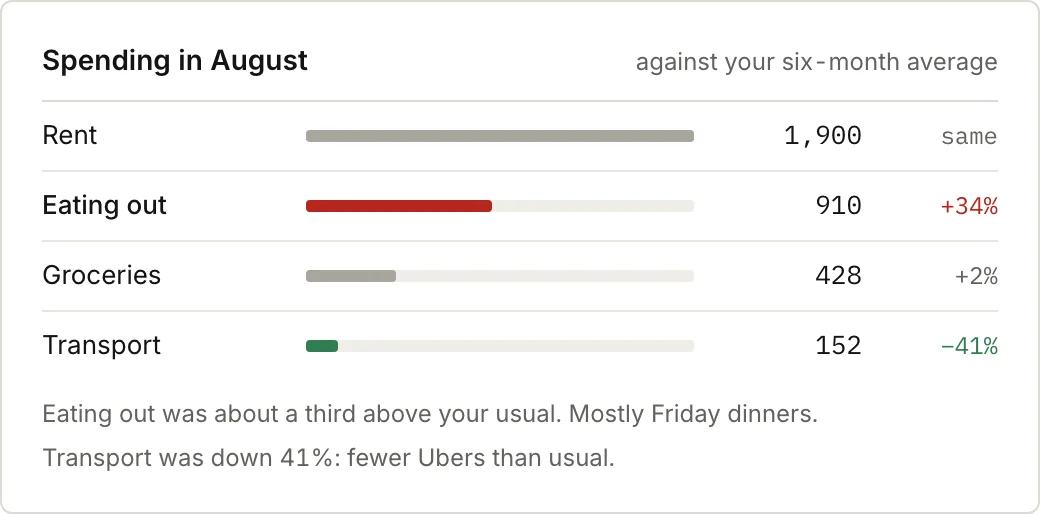
Where you’re spending more than usual.
Each category is set against your usual month, so the one that crept up stands out while there’s still time to change it.
-
A habit that compounds.
Every month you keep, the picture gets richer: your usual month, your saving rate, and progress on goals like an emergency fund or a first home.
If you’re new to this.
Is it worth it if I don’t have much yet?
Yes, it’s the best time to start. The habit is easiest to build while your money is simple, and every month you track adds to the picture you’ll plan with later.
Do I need to know anything about accounting?
No. You bring the month in and answer questions in plain words. The accounting happens underneath, and you never have to see a debit or a credit.
Start the habit this month.
14 days free, no card needed. Then A$10 a month or A$100 a year, and your books are yours to export at any point.